Insights
Finding Value in the Cost Equation: Insights from SCB’s CSU System Student Housing Study
As colleges and universities face increasing pressure to provide more housing while maintaining affordability, the conversation often turns quickly to construction cost. Why does university student housing sometimes cost substantially more than comparable private multifamily development? Where can project teams realistically make a difference?
Drawing on SCB’s experience and expertise in both institutionally led student housing and private multifamily development, the California State University Office of the Chancellor engaged the firm to explore these questions through a peer review and comparative analysis of two recently completed CSU student housing projects. The study examined why university-owned student housing can carry higher first costs than comparable privately developed, non-high-rise multifamily housing, and where those differences can realistically be managed.
By Matt Pietras

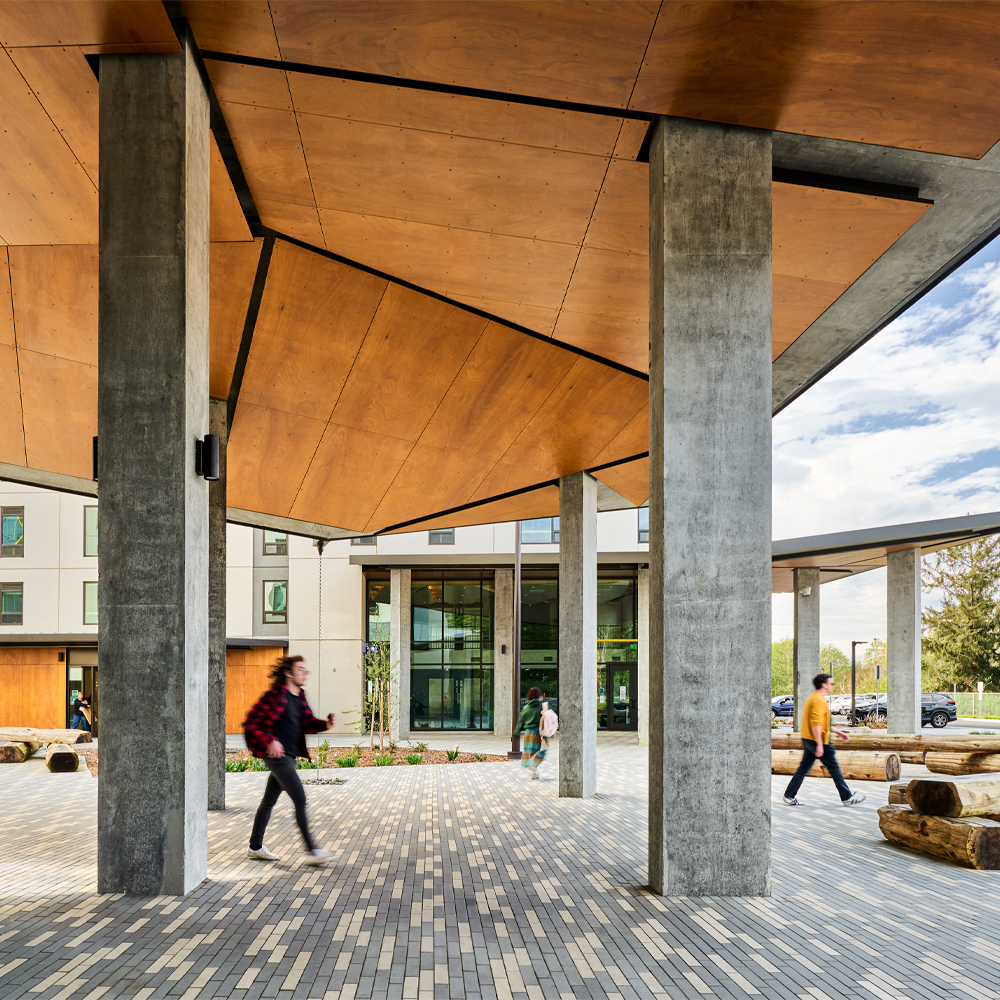
Image: Hinarr Hu Moulik Student Housing at Cal Poly Humboldt exemplifies how construction strategy can address project-specific cost drivers. Taking into account the campus’s remote location and seismic conditions, the team developed a prefabricated façade strategy to reduce onsite labor and support a more cost-efficient delivery.
Know What is Required and What is a Choice
A cost comparison can show that one system, standard, or planning approach costs more than another. That alone does not tell an owner what to do about it. Some differences are mandated by code, statute, accessibility requirements, public procurement, or regulatory review. Others reflect institutional policy, campus standards, program decisions, or project-specific choices.
Before asking, “How do we reduce this cost?” it is often more useful to ask, “What is driving it, and who controls the decision?” That distinction matters because the right response depends on where the authority and flexibility sit: the same cost issue may call for systemwide review, a campus-level adjustment, or a project-level solution.
Cost Drivers Compound
One of the study’s clearest findings was that cost drivers rarely operate in isolation. A program decision can trigger different occupancy or seismic classifications, which can then influence structural requirements and detailing. An accessibility strategy can affect room dimensions, repetition, and bed yield. A mechanical system choice can have implications for electrical infrastructure, controls, rooftop equipment, maintenance access, energy compliance, and architectural coordination.
The impact on cost often comes from this chain of consequences, rather than simply the original decision. That is why understanding these relationships early on is critical, and why an isolated value-engineering line item may tell only part of the story.
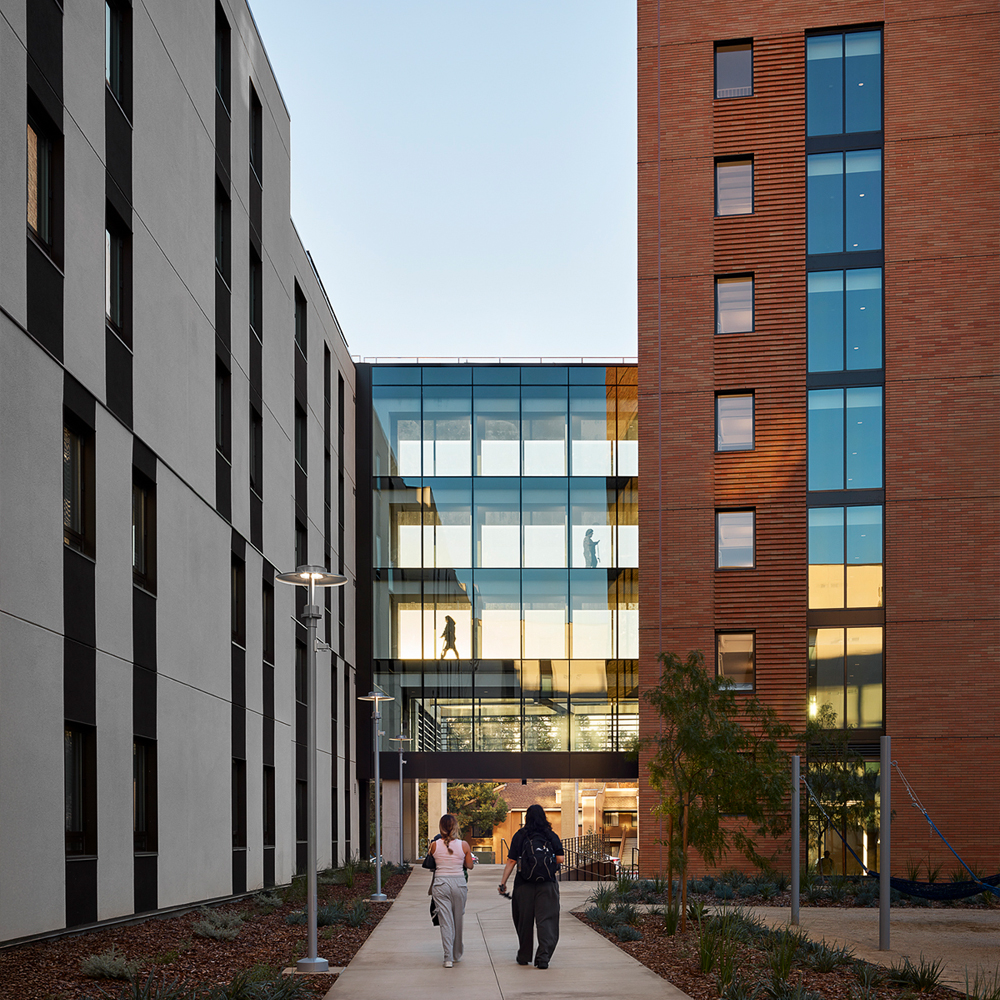
Image: At North District 2 at the University of California, Riverside, utilizing prefabricated cold-formed steep panels was a key factor to improving construction efficiency. Onsite labor was reduced and the construction schedule was accelerated by two months, leading to cost savings for the client.
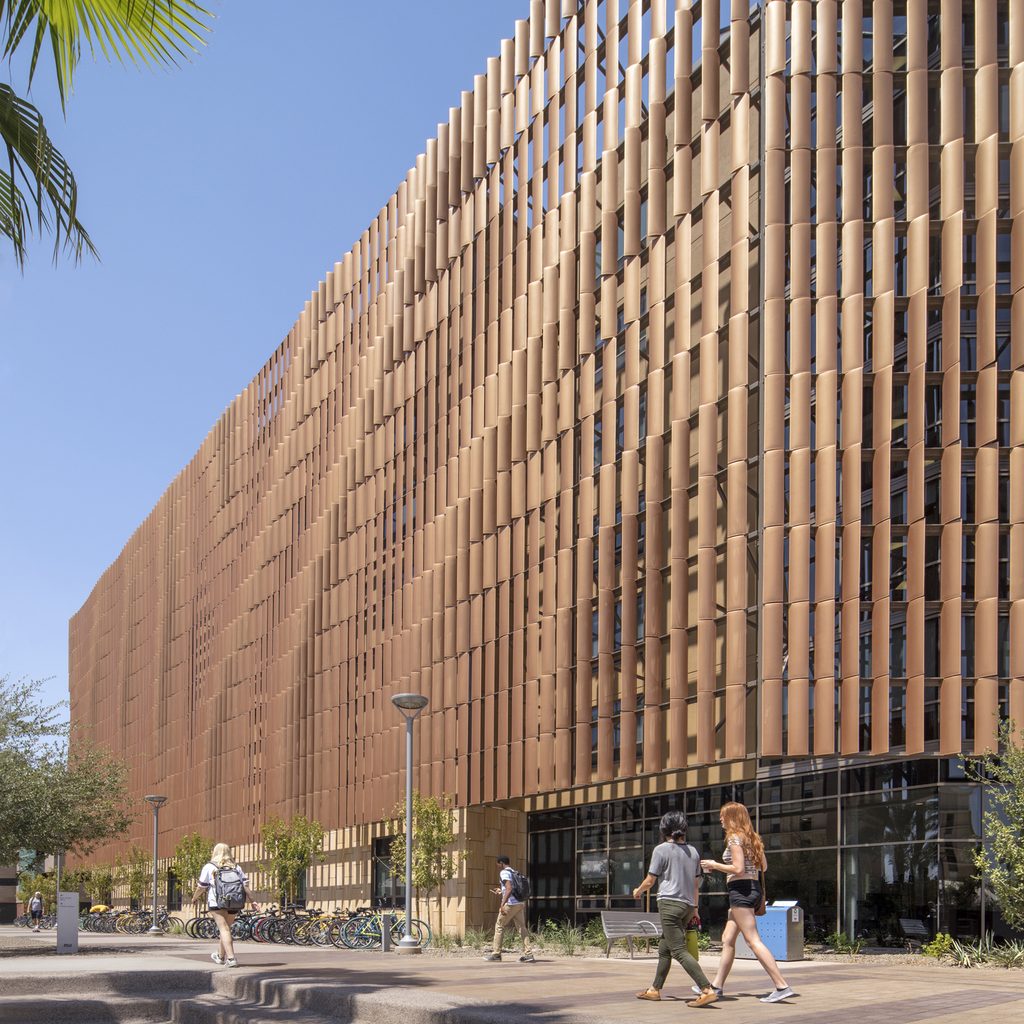
Image: Delivered through a public-private partnership, Tooker House at Arizona State University demonstrates how developer-led cost discipline can work hand-in-hand with long-term value. Identical louvers along the south façade were “tuned” to mitigate solar heat gain and reduce energy use, while their repetition and installation as modular sections reduced fabrication costs and accelerated installation.
Every Square Foot Carries More Than a Square-foot Cost
Cost per square foot remains an important metric, but student housing must also consider how efficiently a project delivers beds. Square feet per bed, bed yield, residential efficiency, amenity and support-space allocation, and circulation can reveal issues that cost per square foot alone does not.
Additional area may be entirely justified by accessibility, student life, operations, or campus programming. The key is to understand whether that area delivers sufficient value to justify the costs it carries through structure, enclosure, MEP systems, finishes, and general conditions.
First Cost Is Only Part of the Value Equation
Universities and private developers often weigh project priorities differently. Private development tends to place greater emphasis on repeatability, construction efficiency, revenue-producing area, replacement cycles, and first-cost discipline. Institutional owners may place greater value on durability, accessibility, resilience, energy performance, systems integration, and long-term operational consistency.
Higher first costs may therefore reflect intentional institutional priorities. Understanding what those additional investments are intended to achieve and the long-term value they deliver provides a more complete picture of project cost.
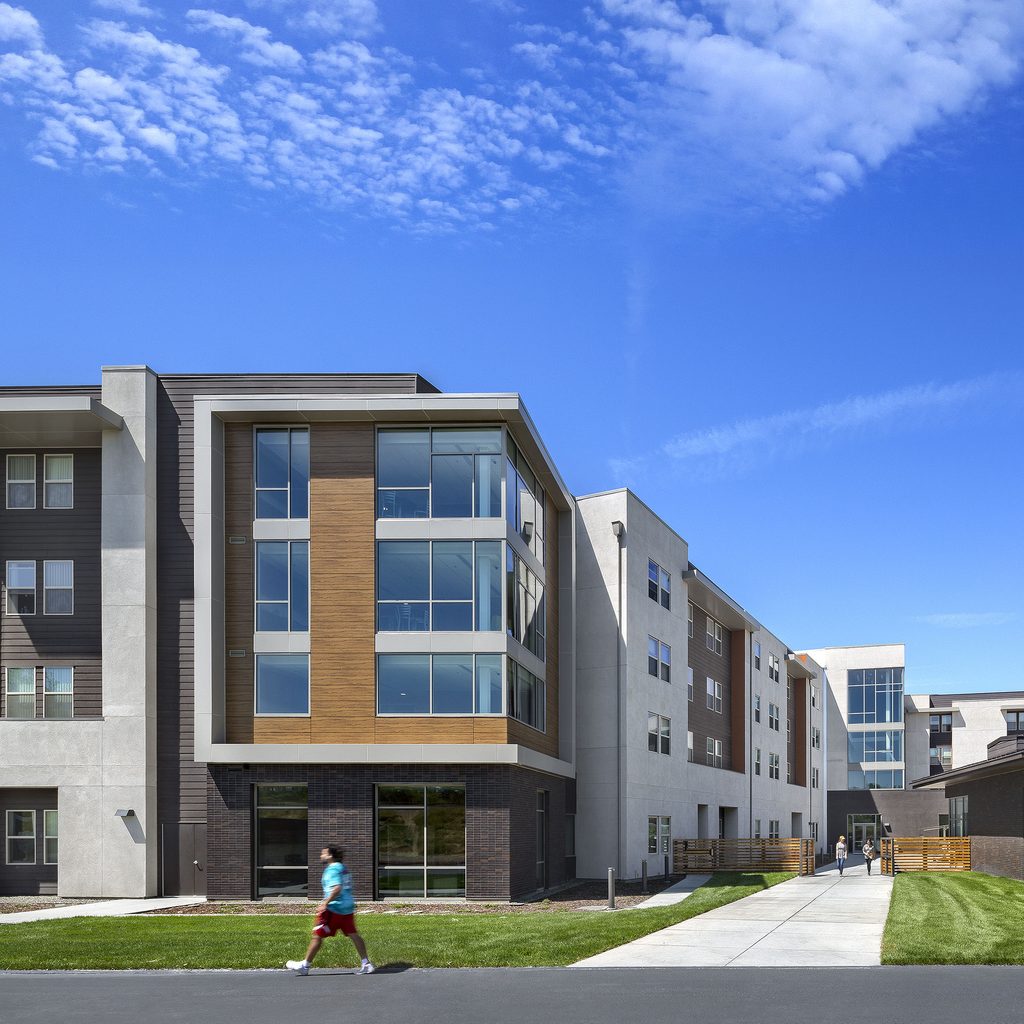
Image: Riverview Hall at Sacramento State University demonstrates how university housing can capitalize on construction strategies commonly used in private multifamily development. The 400-bed residence hall uses four stories of wood-frame construction over a concrete podium, an efficient and more cost-conscious construction typology that doesn’t limit the student life, academic, and support spaces integral to the living-learning community.

“The goal isn’t simply to spend less. It’s to bring institutions, designers, and builders together to understand where costs are coming from and find solutions that deliver both the highest value and a great student experience.”
Matt Pietras, AIA, LEED AP
Associate Principal | Campus Environments
Read BioLooking Forward
The broader lesson is that student housing affordability is not primarily about isolated cost reductions. It depends on understanding how requirements and decisions interact, which costs are unavoidable, where flexibility exists, and what each added cost is intended to achieve.
A private-market baseline can help make those distinctions visible without suggesting that universities should adopt private-market priorities wholesale. Instead, it provides owners, designers, and builders with a framework for understanding what is driving cost, recognizing its downstream effects, and identifying where there are opportunities to make different decisions. Understanding not only what a project costs, but why, creates a stronger foundation for balancing affordability with performance, durability, and long-term institutional priorities.