Campus Library
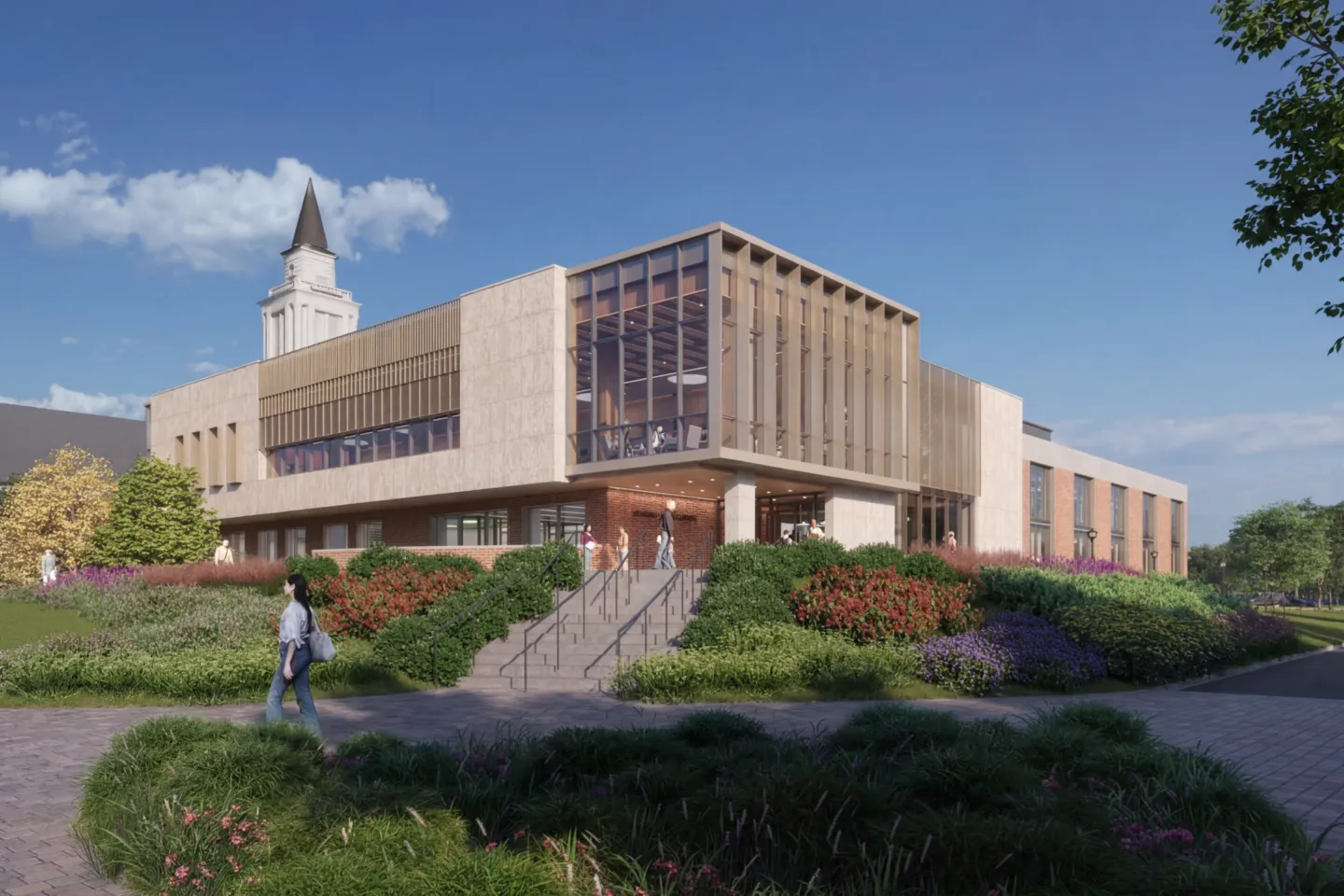
Originally constructed in 1950 and expanded in 1975, the Wheaton College Library reflected a traditional model of academic libraries centered on individual study and physical collections, with limited capacity to support contemporary learning, collaboration, and student services. Recognizing the need to realign this central academic resource with the College’s mission, faith, and evolving pedagogical goals, Wheaton College selected SCB to reimagine the facility as a library for the 21st century.
Prominently located in the campus core and adjacent to Edman Chapel, the project encompasses a 43,000 square-foot renovation of the existing north wing and the replacement of the original Nicolas Library building with a new 24,500 square-foot addition. Through a comprehensive program verification and feasibility study, the design team determined that the structurally robust north wing could be renovated to house the consolidated library collection, while a new addition would provide space for expanded academic enrichment programs and establish a stronger physical and symbolic connection between the academic and spiritual hearts of campus.
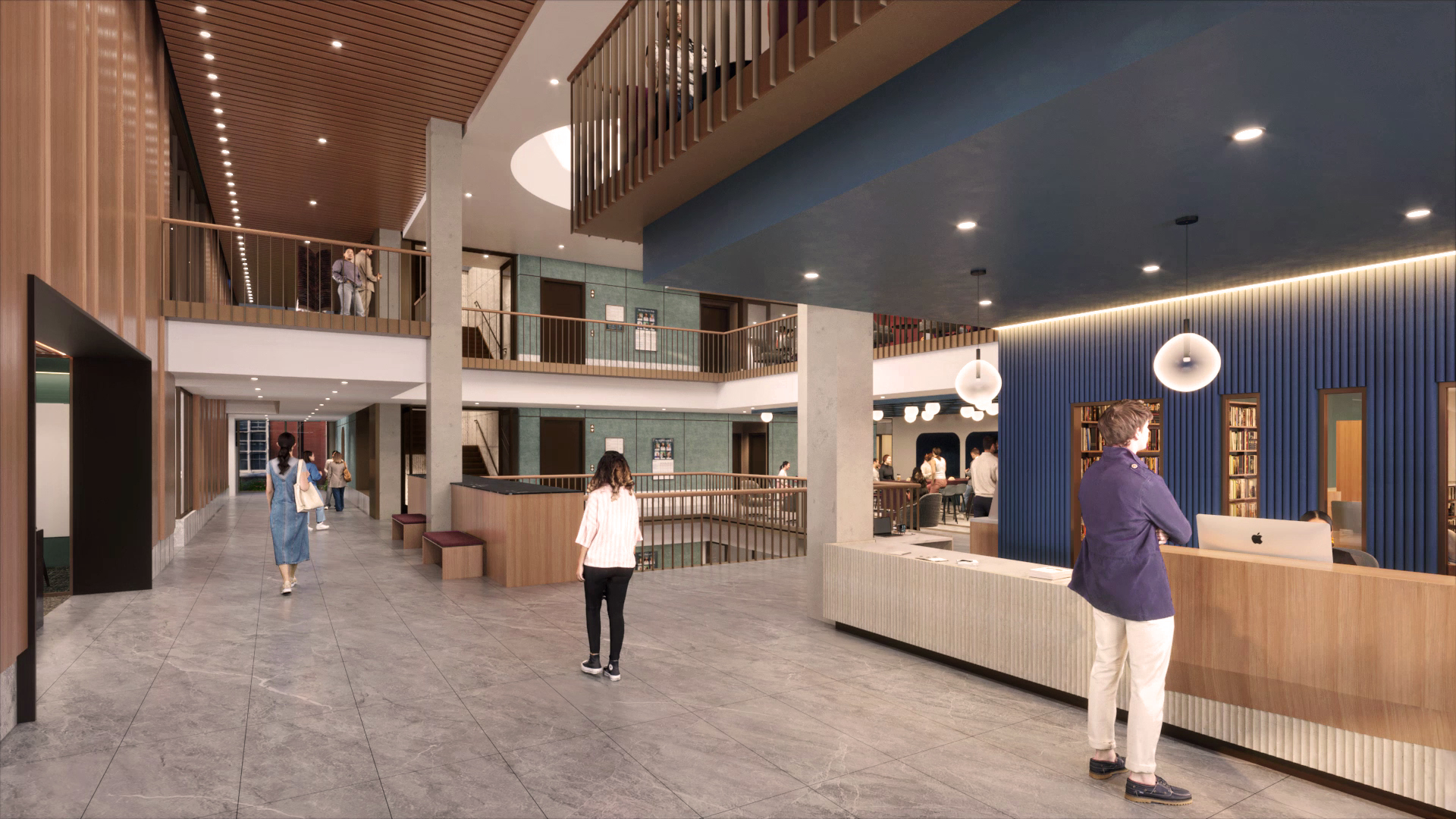
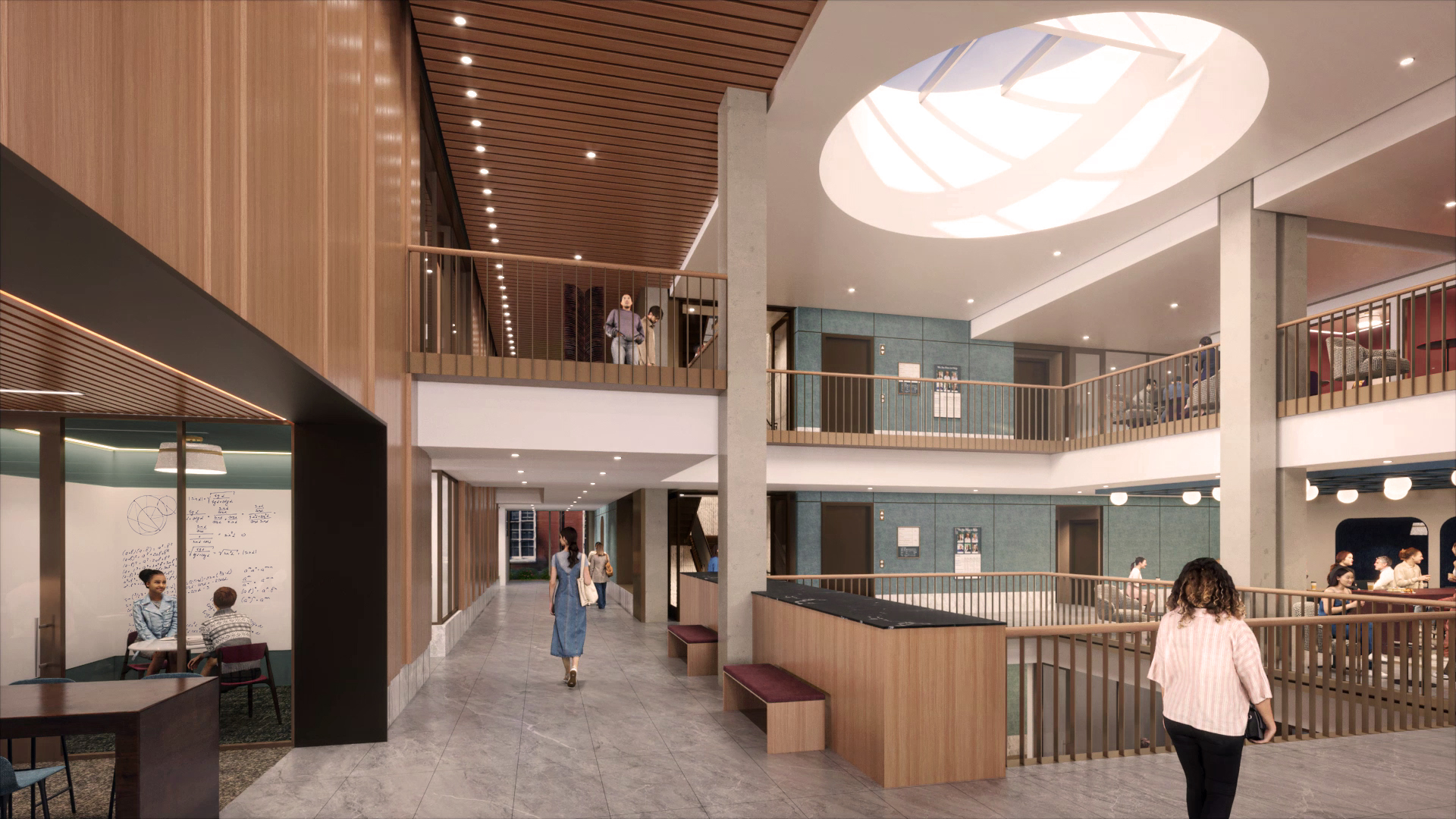
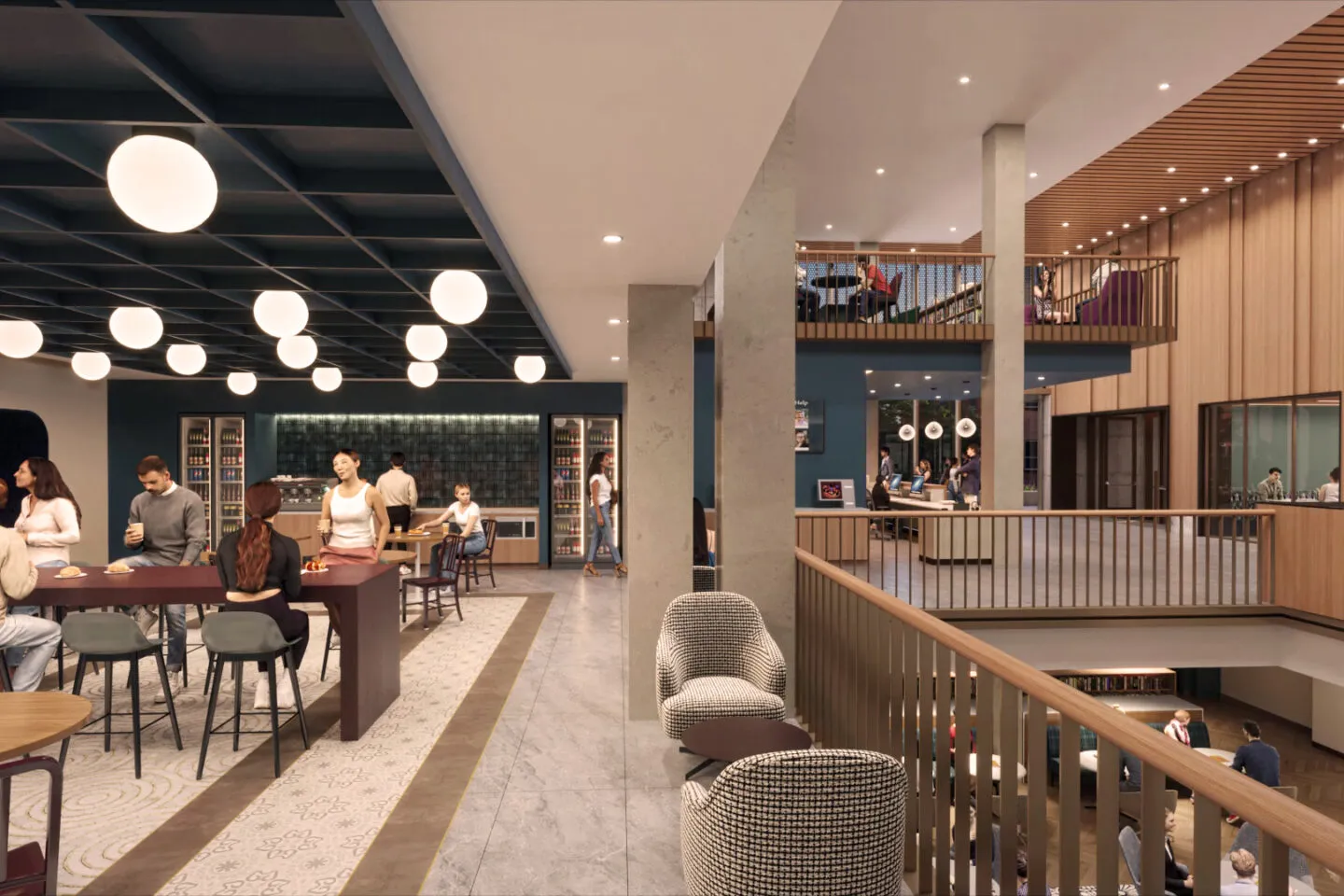
The ground floor is envisioned as the academic commons, a vibrant hub for collaboration, interaction with library staff, and informal learning. A new café offering coffee and grab-and-go food enhances the social atmosphere and encourages extended use of the space. As users move upward through the building, spaces transition to quieter, more contemplative environments dedicated to study and reflection.
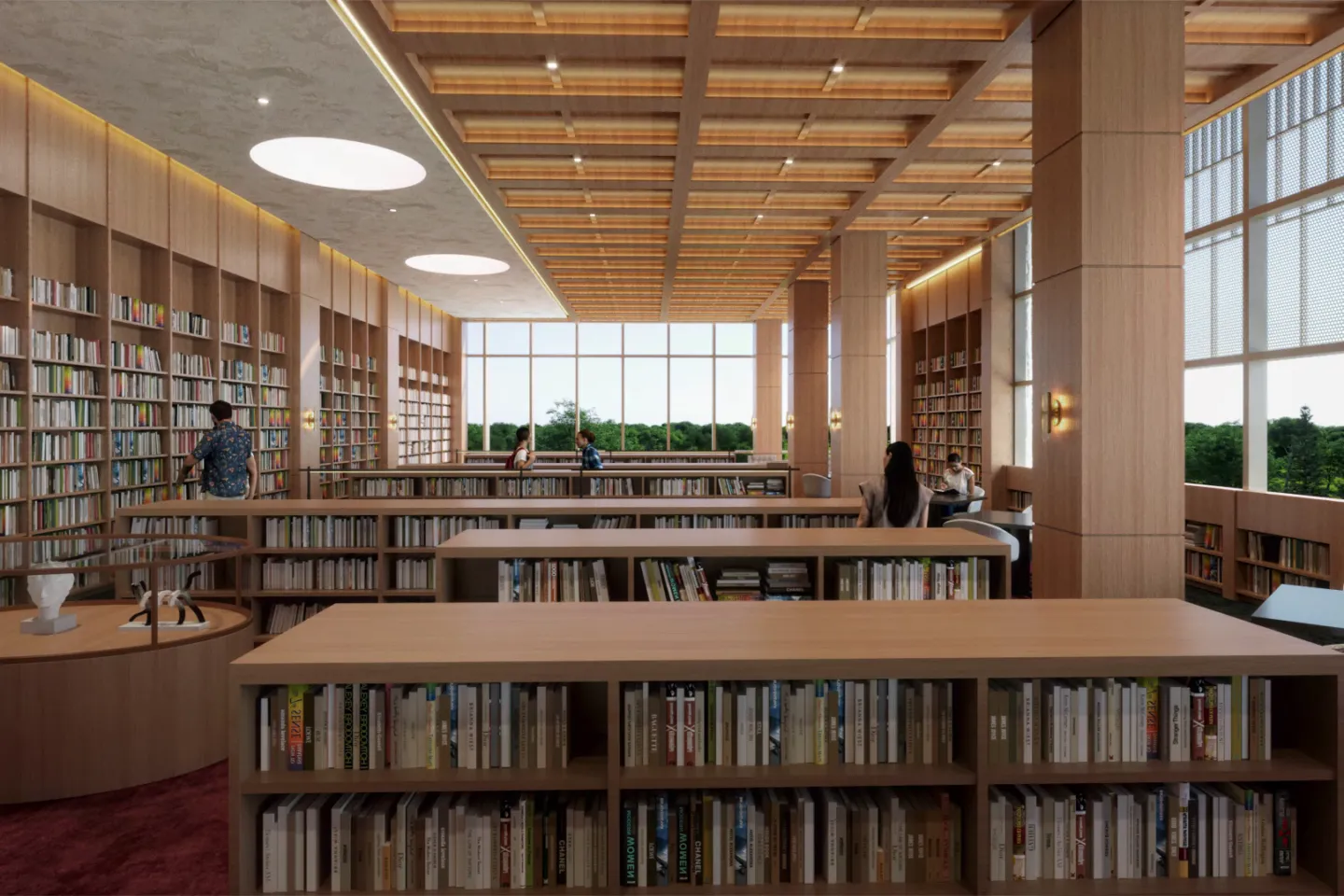
New and expanded academic enrichment programs are integral to the reimagined library. These include an enlarged Writing Center and the relocation of Learning and Accessibility Services to a more visible and central location within the library. The project also introduces a suite of flexible, general-purpose classrooms; a digital makerspace with software access, 3D printing, and light fabrication; audio and video recording studios; and a graduate PhD suite with dedicated workspace and support amenities. In response to student input, the building offers a wide range of small study rooms designed for groups of two to five students.