Insights
The Next Chapter for Campus Libraries: Five Observations on How Design is Supporting a New Generation of Learners
By Gail Wozniak
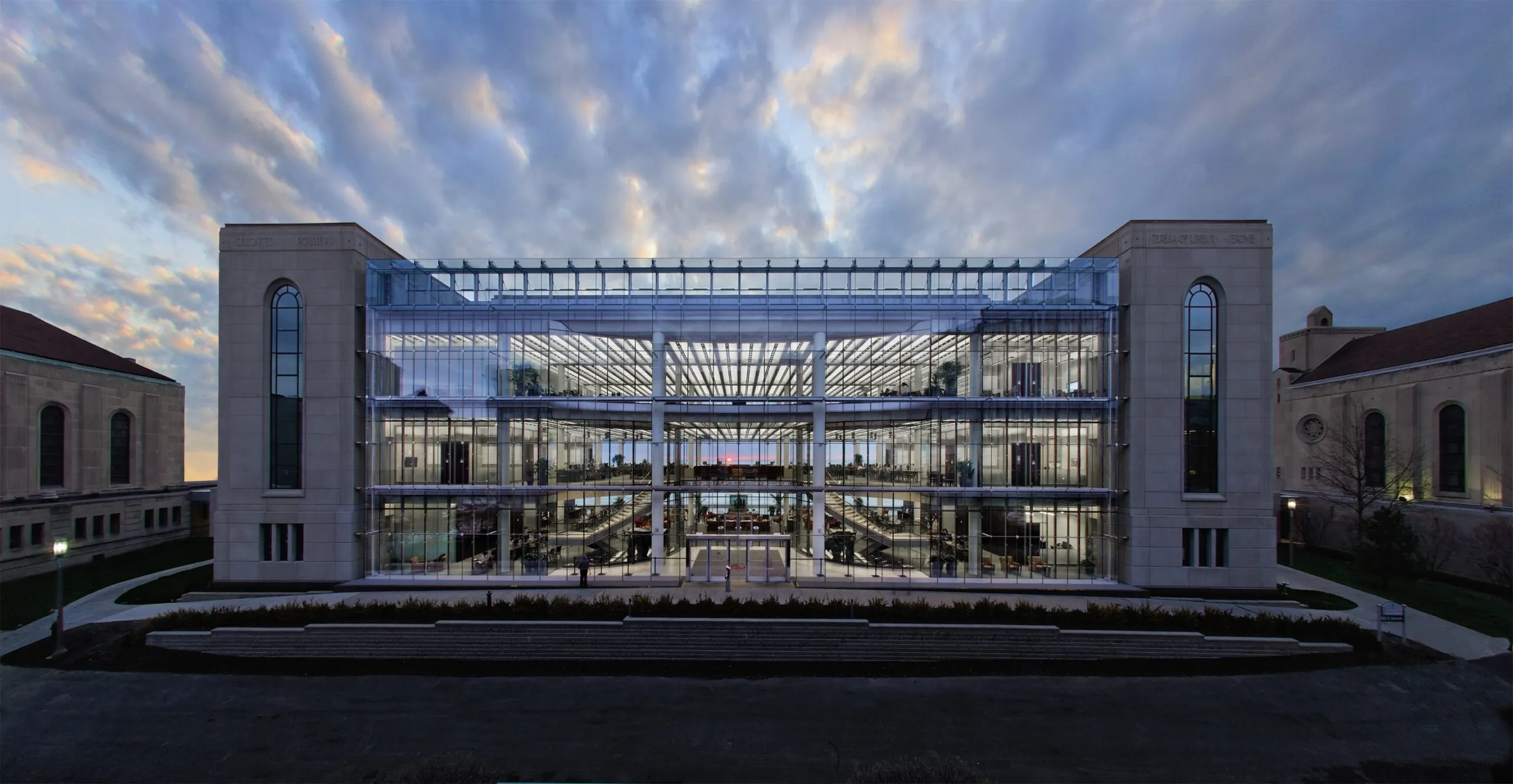
Image: The Information Commons reimagines the campus library for the digital age, serving as an academic hub at the heart of Loyola University Chicago’s campus with collaborative learning spaces and sweeping views of Lake Michigan.
The academic library has long served as a community anchor on campus, welcoming students, faculty, and staff across all disciplines. This spirit of inclusion and the pursuit of knowledge will always be at the core of the library’s mission; however, with new understandings about how we learn, unprecedented access to an ever-growing amount of information, and technology-driven education platforms, today’s academic libraries are experiencing a transformation. SCB’s Campus Environments practice group is working with colleges and universities across the country to understand how new generations of learners and educators are reshaping campus spaces.
Here we offer five observations on the evolution of academic library design.
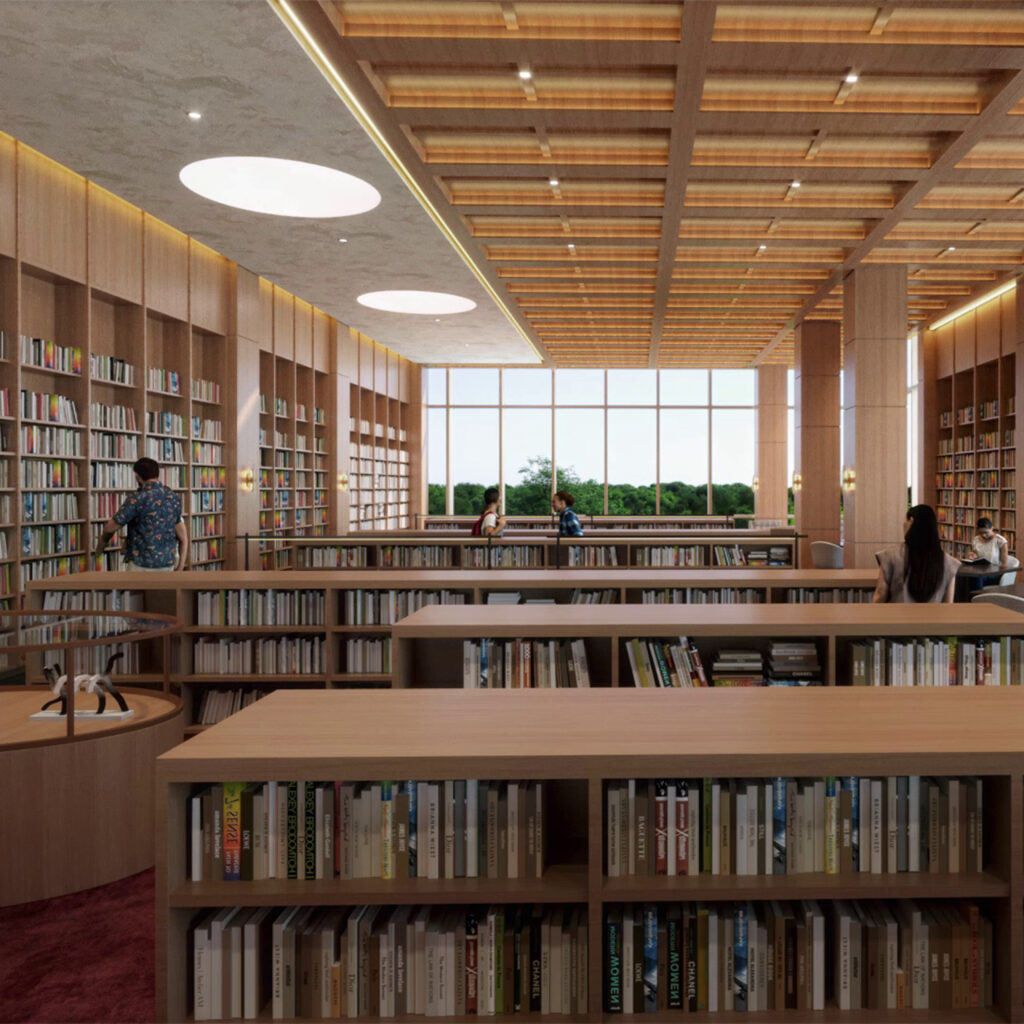
Image: At Wheaton College, a combination of consolidated high-density storage, traditional stacks, and a new reading room allows the College to maintain, and grow, its full collection onsite while creating more space for students.
Collections
The library continues to serve as a central resource for information on campus, but an ever-expanding spectrum of formats is changing how students and faculty access and utilize this information.
Design Considerations
- Access to both physical and digital collections becomes a primary driver of space planning
- Spaces must support seamless, simultaneous engagement across multiple mediums
- Environments should enable users to manipulate, combine, and convert information
- Adjacencies should support fluid movement between collections and study spaces
Partnerships
The library has always been a place that encourages interdisciplinary study and exploration. This continues today in a more planned manner with surveys showing that nearly 75 percent of academic libraries share space with programs and departments administered by non-library staff.
Design Considerations
- Planning for library spaces should be a transparent process that engages multiple campus stakeholders and students
- Designers must understand the various goals and needs of all stakeholders, communicating a shared understanding of the library and its partners
- Adjacencies are key to encouraging departmental convergence and interdisciplinary activities
- A strategic assessment of spaces and utilization within existing libraries can yield square footage to be dedicated to new program offerings and spaces to support non-traditional learners
- The process, and subsequent design, must be mindful that librarians ultimately orchestrate all activity within the library
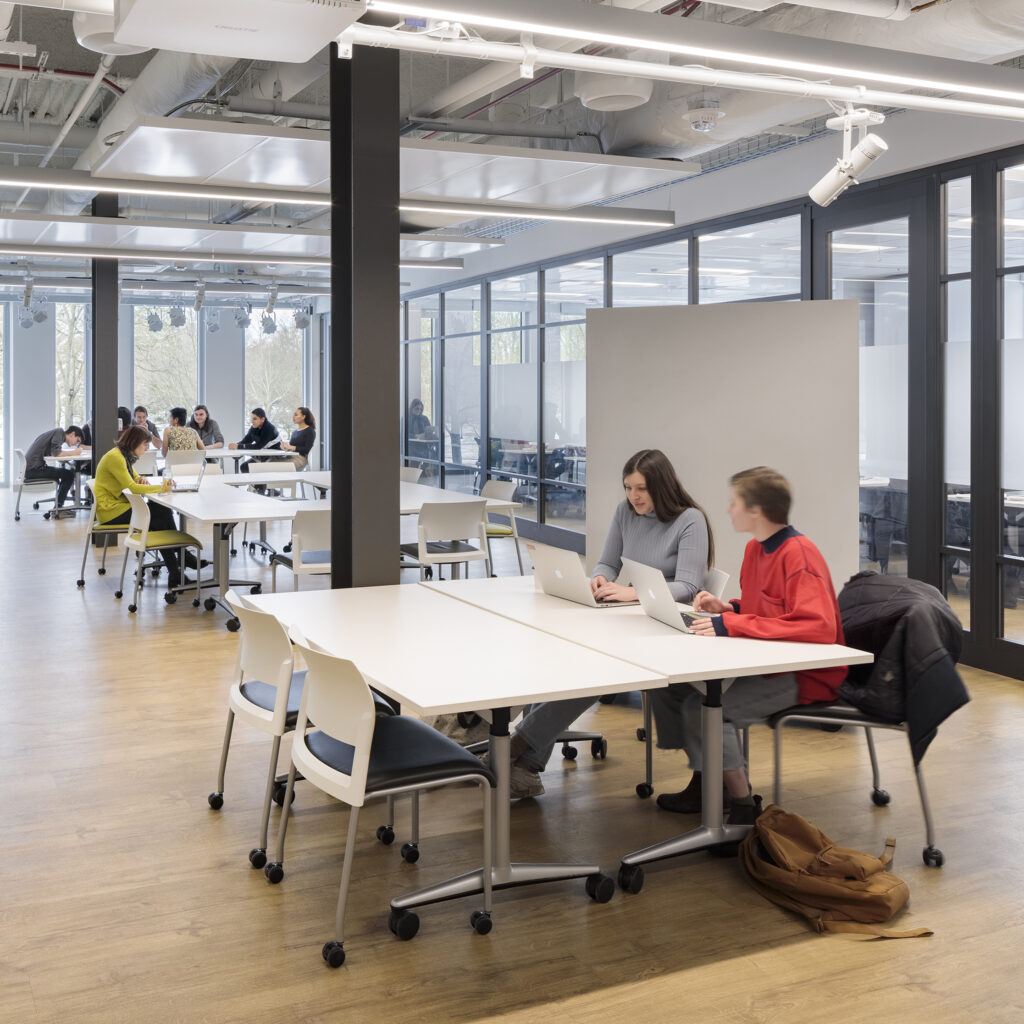
Image: The Oberlin Center for Convergence (StudioOC) at Oberlin College is a highly flexible and adaptable space designed to host a variety of multidisciplinary learning communities and initiatives.
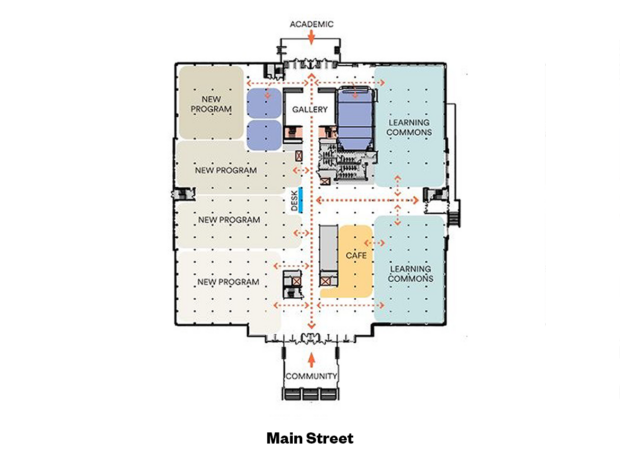
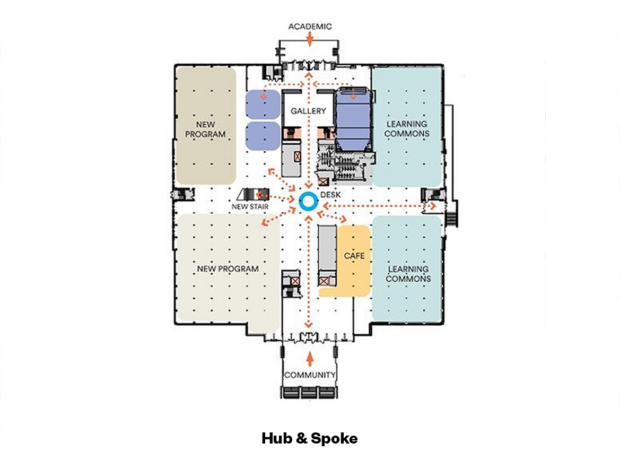
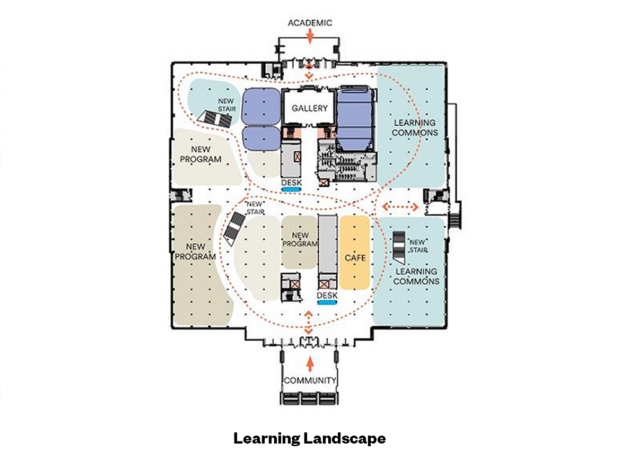
Image: At the University of Iowa, planning studies explored three distinct service models for the renovation of the Main Library, pairing each with a unique design strategy to support evolving user services.
The Librarian
With information now ubiquitous, librarians are more important than ever, serving as stewards of large, multi-media collections. With the library as their workplace, attention must be given to the spaces and resources they need as professionals.
Design Responses
- With librarians shifting from service providers to co-collaborators, spaces for teamwork are as necessary as spaces for individual research
- Library design should balance librarians’ availability to patrons with space and privacy to perform their work
- Clear sightlines are critical, both in establishing accessible points of service for users and allowing library staff to easily monitor spaces
- Library staff need flexible spaces where they can test workflows and adjacencies
Information Into Knowledge
Knowledge is not linear. It is a multi-stranded network shaped by visual and aural language, memory, emotion, and sensation. Thus, design must take into account all of these factors to create spaces that truly foster learning.
Design Considerations
- Spaces and technology to support data mining and visualization, immersive virtual reality investigations, the digital humanities, and the emerging importance of AI will be increasingly important in the academic life of students and faculty
- Wellness will make its way into the library through design and materials that prioritize health and comfort to create spaces optimal for learning
- Sustainable design strategies (like natural lighting and ventilation) can serve a dual purpose, reducing energy use and cost while creating healthier interior environments
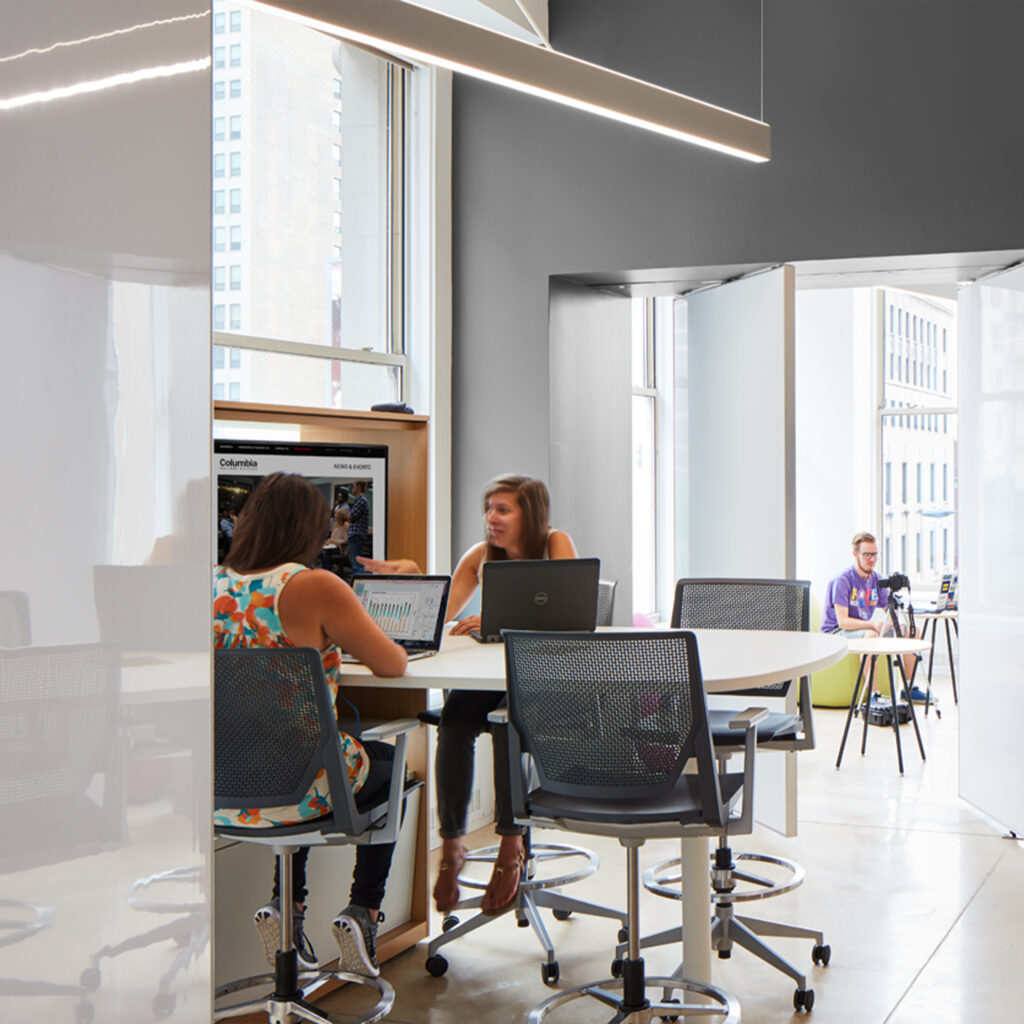
Image: A student workroom at Columbia College Chicago offers a multitude of high- and low-tech resources to facilitate collaboration and group work. An abundance of daylight along with a variety of seating postures creates a space that enhances the student experience and overall wellbeing.
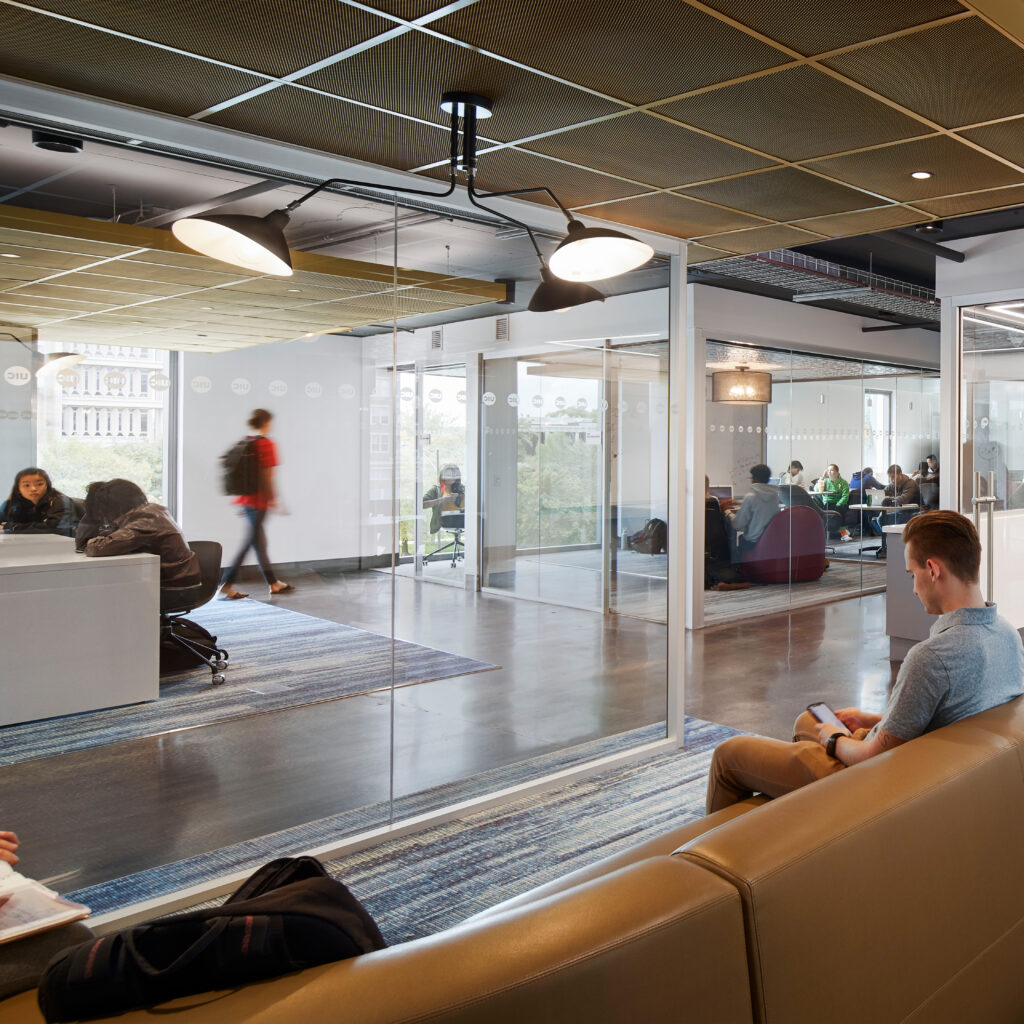
Image: At the University of Illinois Chicago, a Student Success Center includes a range of study environments, from private rooms for focused individual work to spaces that support group collaboration.
Contemplation & Collaboration
Many students learn by toggling back and forth between engagement and introspection. As a result, three primary modes of study have emerged on campus:
Alone
Focused, quiet, heads-down work
Alone-Together
Individual study amongst others
Together
Collaborative, group work
Design Considerations
- In addition to an infusion of spaces to host and support active group work, dedicated space for quiet individual study will continue to be a critical part of the library experience
- Design elements can encourage a desired behavior; lighting and acoustic levels, color, furniture layouts, etc. can come together to signify to users that they are in a quiet space vs. a group space
- Understanding neurodiversity is leading to a greater diversity of spaces within the library, from large and small scale, open and enclosed, active and quiet, bright and dark. This palette of choice helps create a building that is accessible to all students.
“Today’s campus library is no longer just about access to books; it’s about creating flexible environments that adapt to students’ academic, social, and technological needs.”
Gail Wozniak, NCIDQ, LEED AP
Associate Principal | Campus Environments
Read Bio
The next chapter of the campus library is not defined by what it replaces, but by what it makes possible. While there is no singular model for the library of the future, the most successful transformations balance access to information with spaces for collaboration, support, and reflection, creating environments that support how students learn today while remaining flexible for what comes next.