Health Sciences Campus, Loyola University Chicago
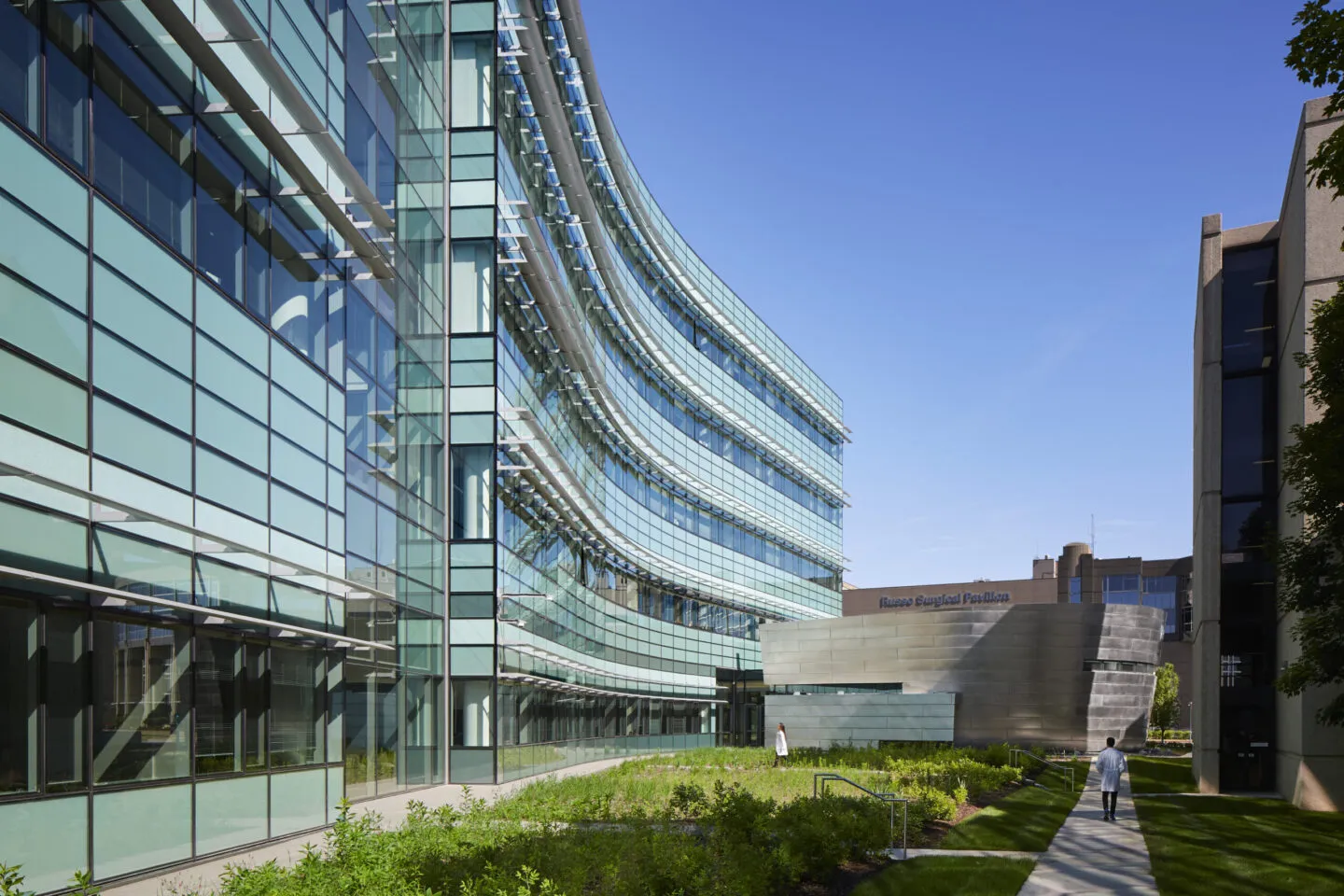
SCB guided Loyola University Chicago through a comprehensive study of the existing Health and Sciences campus buildings to assess inventory of existing space.
The scope includes determining departments with growth potential, identifying under-utilized and outdated space(s), and areas available for incubation of new programs. The SCB team has proved key information to Loyola on understanding the status of their campus. The process includes:
- Evaluation: The team evaluated and walked through a total of 443,000 square feet across campus. They spent two weeks on campus walking the campus and evaluating traffic patterns at peak hours of operation in order to gain a real-time understanding of the underutilized space.
- Data Gathering: Working closely with Director of Business Operations, SCB gathered key data sets indicating what spaces were used most often, identify spaces that were not used to the fullest potential, and establish office and space usage of faculty and staff to plan for departmental growth. The team conducted interviews with faculty and staff, and executed observational studies of physical spaces, including time lapse studies.
- Workshops: Working closely with the Executive Committee, SCB conducted a series of charrettes to create a dialogue above space assumptions. Charrettes involved trace paper, makers, and scaled program blocks that allowed the Executive Committee to re-imagine the existing spaces on campus and imagine what a modern faculty could be.
Through the process outlined above, SCB identified 27,000 squre feet of underutilized space across the campus. The deliverables included program documents, short-term and long-term project goals, blocking and stacking plans for existing buildings, and phasing plans for any proposed renovation.
Additionally, SCB has completed numerous projects for Loyola University Chicago’s Health Sciences Campus.
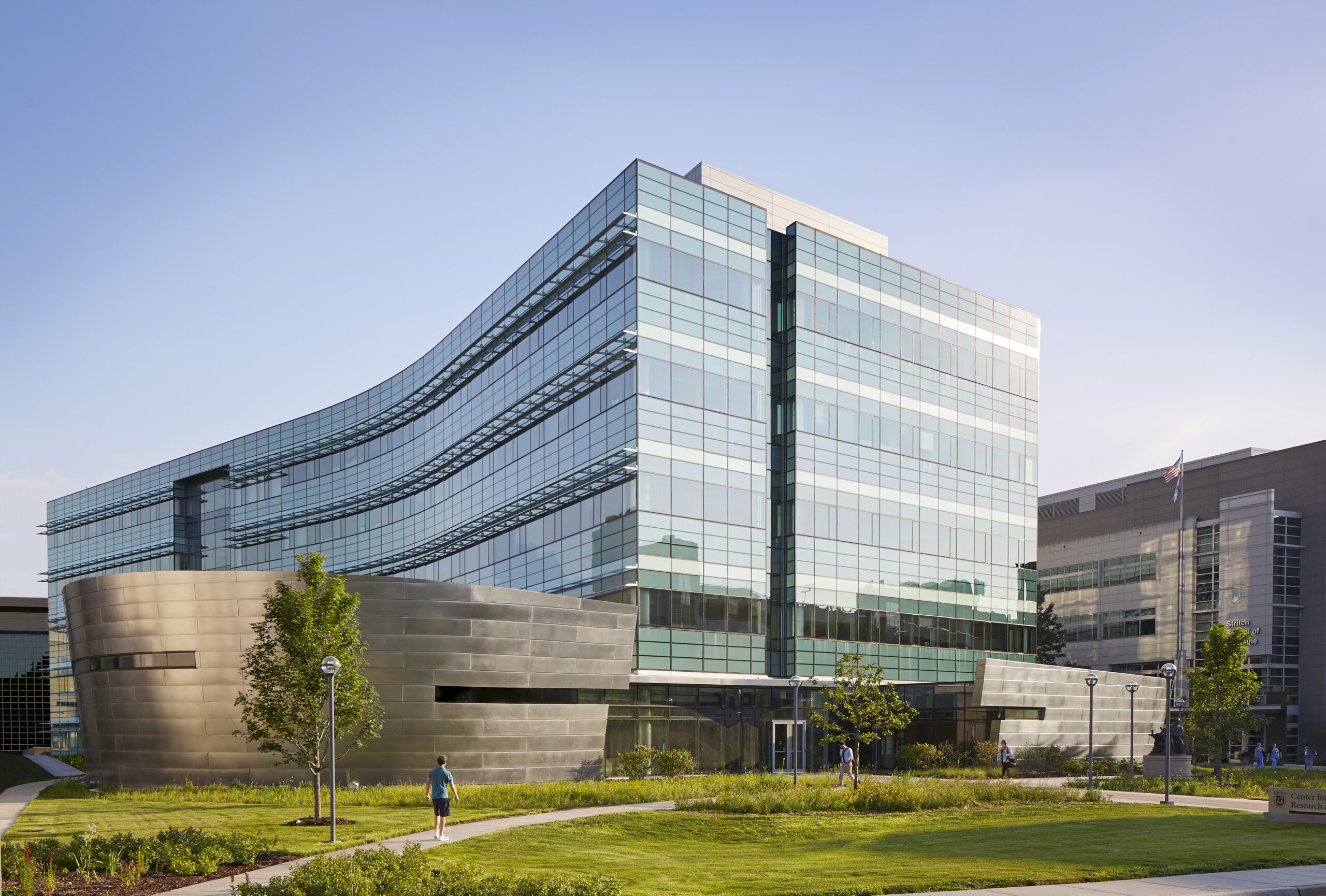
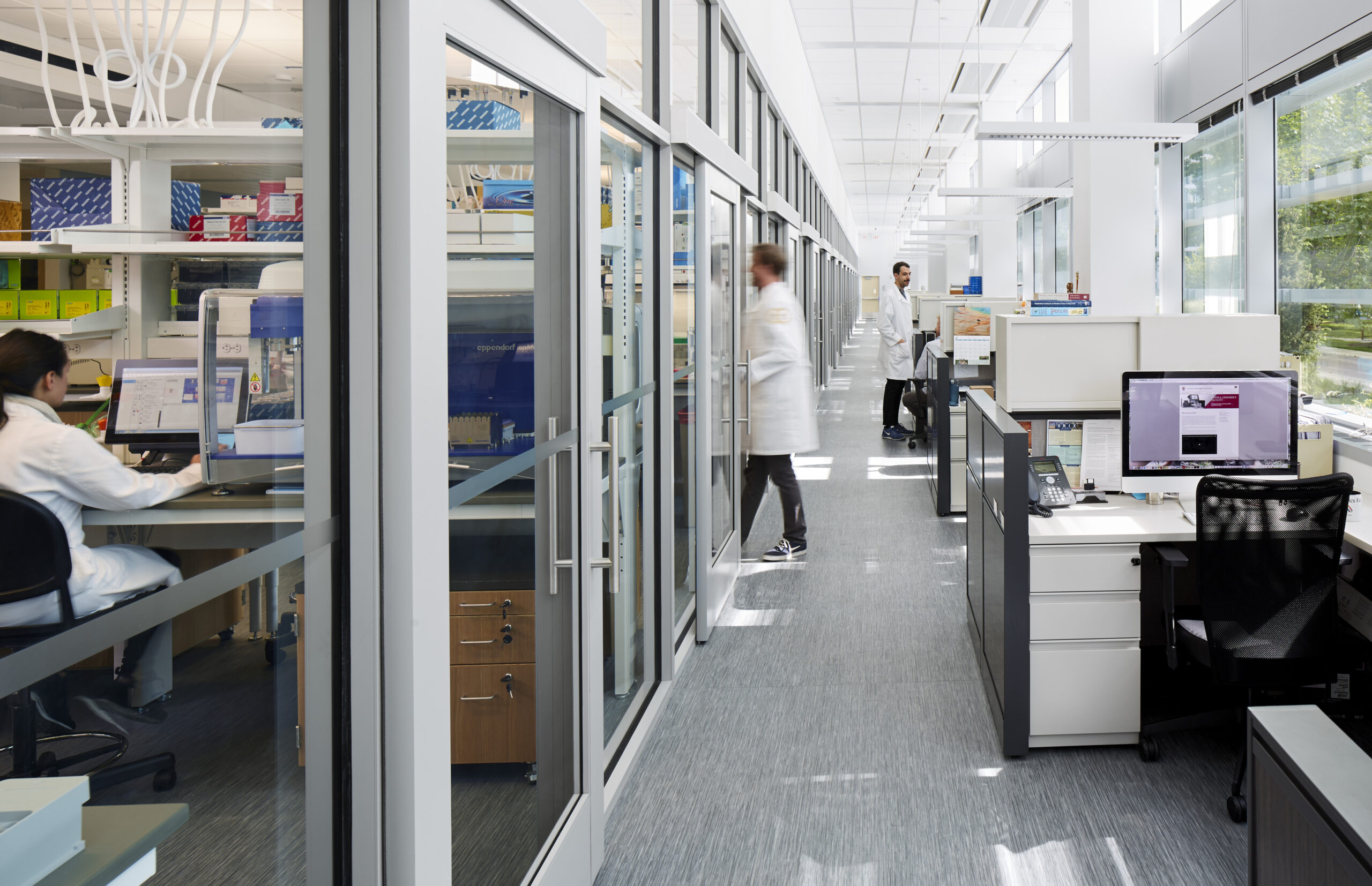
Center for Translational Research and Education (CTRE)
The Center for Translational Research and Education (CTRE) is an integrated research and teaching facility that augments bench-to-bedside effectiveness created by co-localizing basic sciences with clinical research, including population, health services, nursing and intervention foci, all targeted on improving prevention strategies and treatment outcomes for the patient.
The SCB-led design team focused on creating flexible, state-of-the-art laboratory spaces and a variety of office and collaborative environments on the upper floors, as well as a more public, accessible ground floor with an auditorium for large lectures and public, health-related community events.

Cuneo Health Sciences Center
A portion of the Loyola University Chicago Health Sciences Campus Programming and Master Plan included incorporating the new Parkinson School of Health Sciences and Public Health into existing campus buildings. Through the discovery process, SCB found potential at the Stritch School of Medicine (SSOM) after carefully examining the study habits and programming needs of medical students, faculty, and staff. The modernization of SSOM centered on two fundamental ideas—forward-thinking teaching environments and transparency.
To maximize the value of each square foot, multiple, mid-sized rooms equipped with technology that links all of them together will replace the rarely full large lecture halls, allowing for flexible class sizes. In response to the medical students’ need for private study and two- to three-person collaboration rooms, a variety of individualized, tech-enabled study rooms with floor-to-ceiling writable surfaces now surround the perimeter of the building. The windows and glass enclosure of the study rooms allow the building to take full advantage of natural light and create a sense of openness and activity while still providing students with places to study quietly.
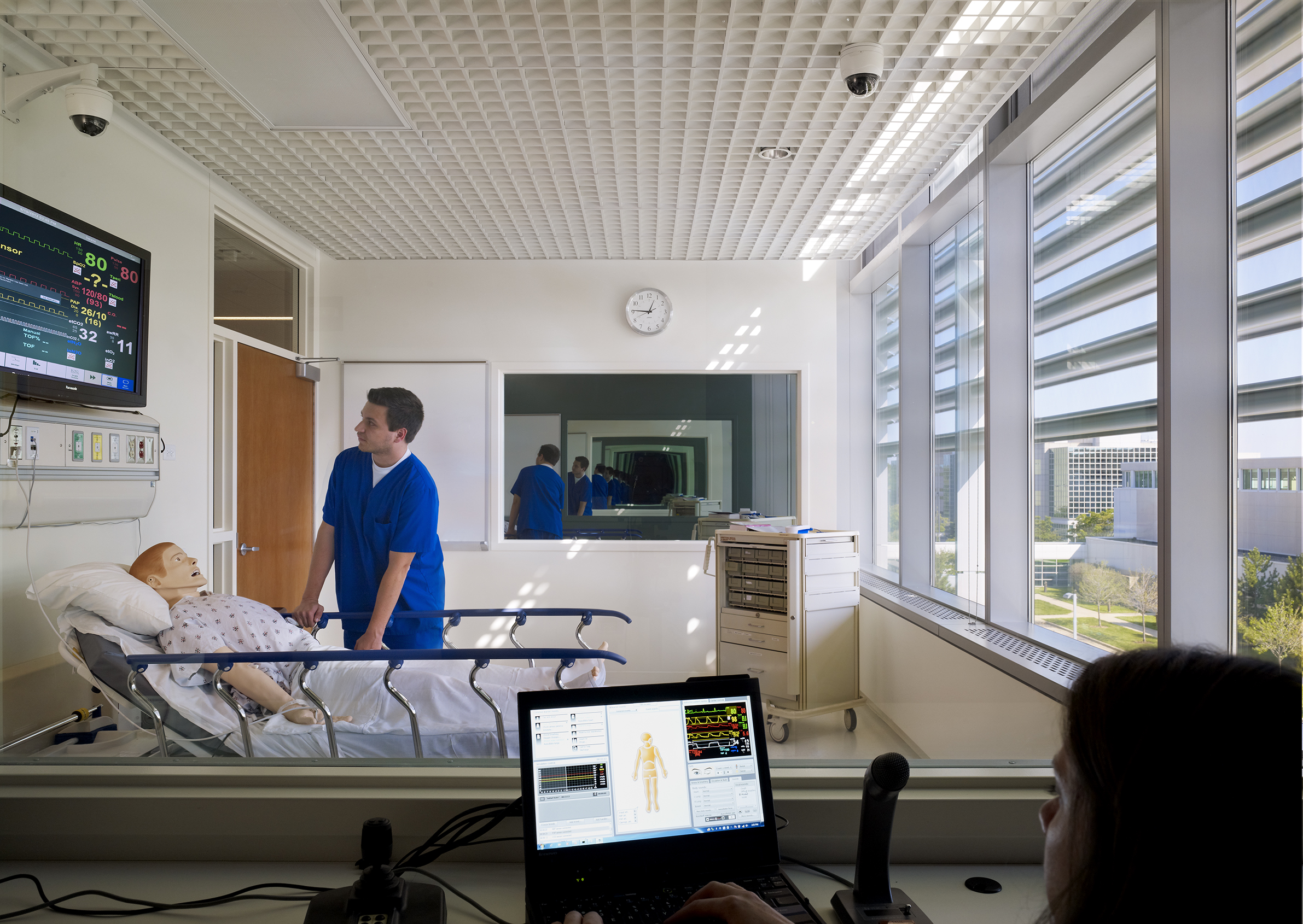
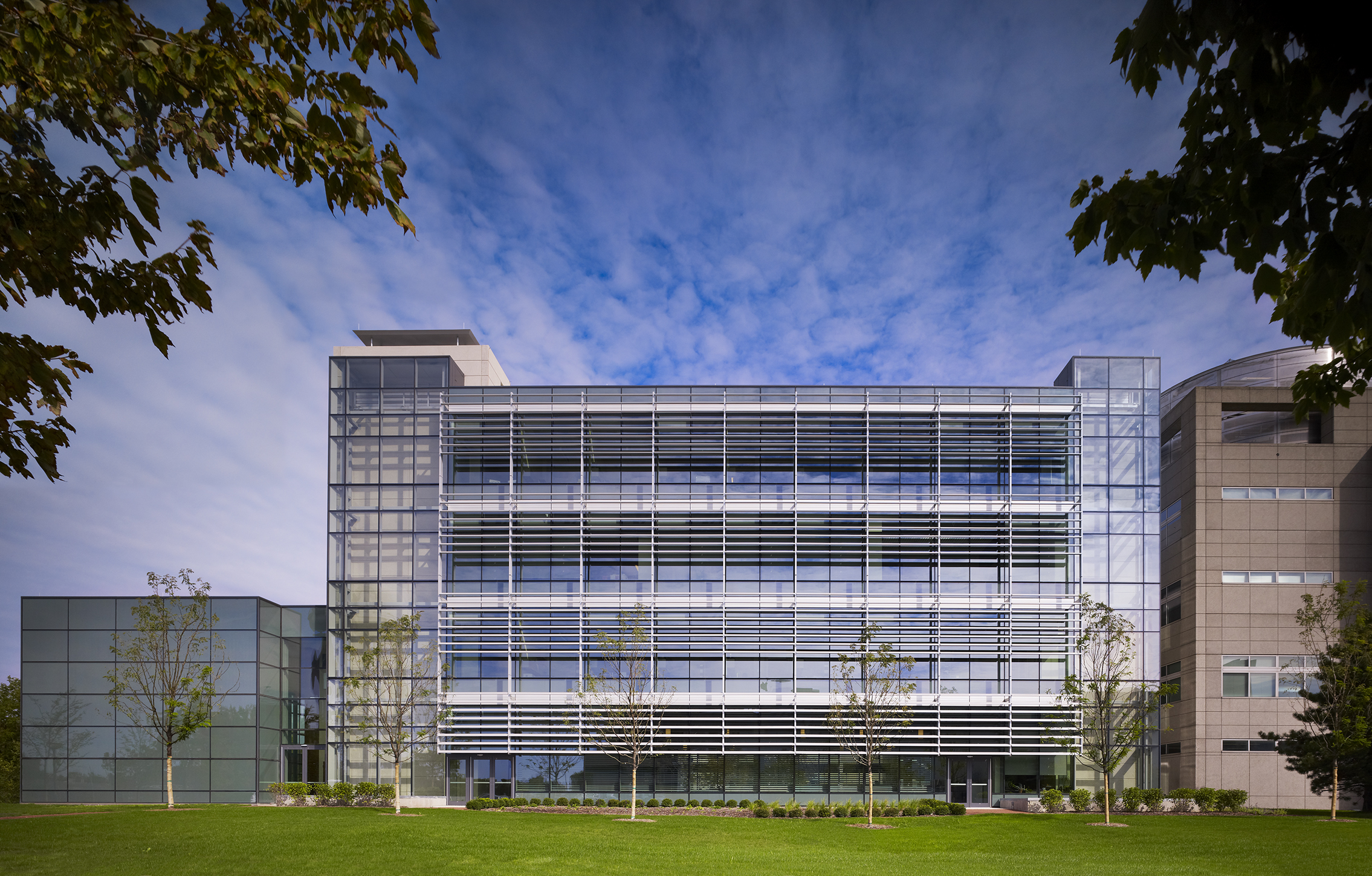
Marcella Niehoff School of Nursing and Center for Collaborative Learning
Located on Loyola University’s Medical Center Campus in Maywood, Illinois, the Marcella Niehoff School of Nursing and Center for Collaborative Learning is the new home of the University’s nursing program. An educationally innovative model in medical education, the facility directly links the new nursing school to the existing medical school. In this collaborative learning environment, students simulate real world situations, working and learning together as a medical team. The four story building houses a learning commons and quiet study area, as well as a cafe, classrooms, lecture hall, faculty offices, and full floor hospital simulation lab for mock medical and nursing procedures.